


What Is Cocoa Mass? How Is It Used?
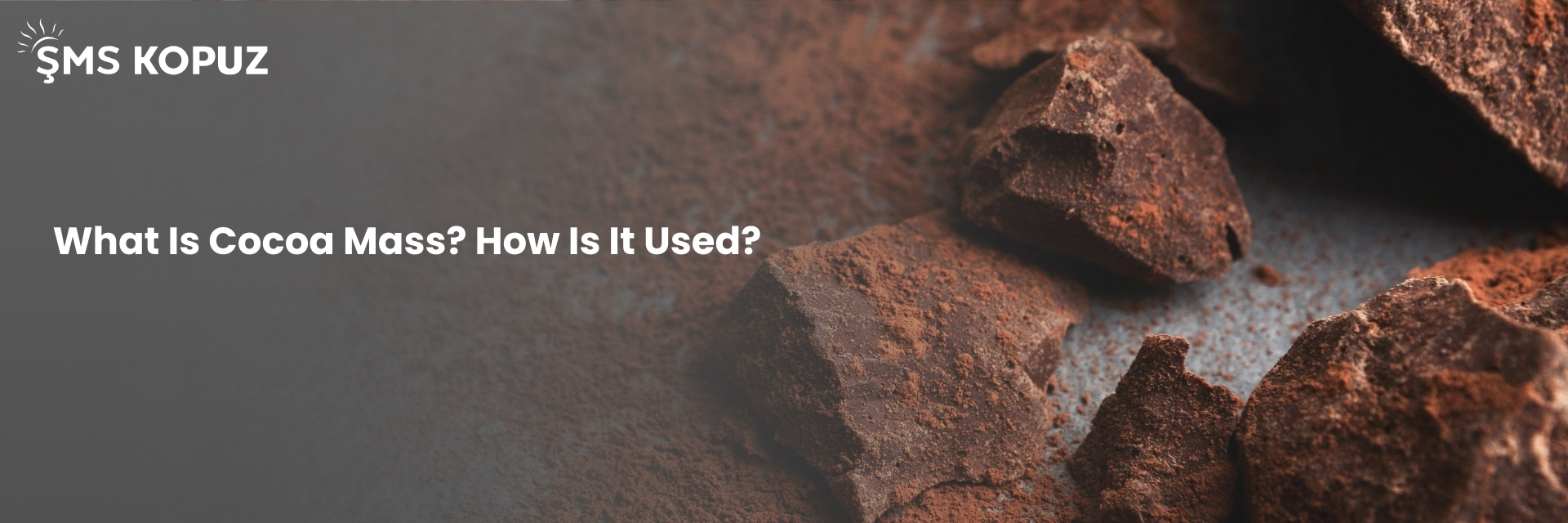
Cocoa mass is a concentrated raw material obtained from roasted and finely ground cocoa beans and is considered the primary ingredient in all cocoa-based products. In addition to chocolate production, cocoa mass serves as a fundamental component in a wide range of cocoa applications.
How Is Cocoa Mass Produced?
The production process of cocoa mass progresses as follows:
- Cocoa beans are fermented, dried, cleaned and then roasted at high temperatures to enhance their aroma profile.
- The roasted beans are cooled and separated from their shells through dedicated winnowing machines, resulting in clean inner kernels.
- These kernels are processed in multi-stage grinding systems under controlled heat until they reach a smooth, fluid paste consistency.
- The resulting liquid paste is referred to as cocoa mass, also known as cocoa liquor, after which it is molded, solidified and packaged.
Characteristics of Cocoa Mass
Here are the key characteristics of cocoa mass:
|
Cocoa Mass Properties |
Description |
|
Fat Content |
Contains approximately 52–55% cocoa butter. |
|
Flavor Profile |
May present fruity, coffee-like or intense bitter notes depending on origin. |
|
Natural / Alkalized Options |
Natural cocoa mass offers a softer flavor profile, while alkalized cocoa mass provides a sharper, more intense taste with reduced acidity. |
How Should Cocoa Mass Be Used?
When processed under optimal conditions, cocoa mass provides maximum flavor and quality in chocolate and other food applications. Although usage varies depending on the final product, several principles remain essential:
● Cocoa mass is melted before being incorporated into chocolate formulations, ideally at 45–50°C.
● The cocoa butter content within cocoa mass determines fluidity and texture, therefore the correct proportion must be used.
● When combined with sugar, milk powder or emulsifiers, homogeneous distribution must be ensured to prevent texture defects and flavor imbalance.
How Should Cocoa Mass Be Stored?
Cocoa mass requires proper storage conditions to maintain product integrity, especially for industrial-scale operations. The product should be kept at 18–20°C, and ideally within the 15–22°C temperature range.
Relative humidity must remain between 50–60%, and should not exceed 65%. Cocoa mass should be protected from direct sunlight and UV exposure, with minimal light contact during storage.
Because it is sensitive to odor transfer, storage areas must be free from volatile substances. The product should be stored in its original airtight packaging (vacuum-sealed or laminated bags), or in metallized bags placed on pallets.
During storage, pallets should not exceed 2–3 stacking layers, depending on packaging durability. When ideal temperature and packaging conditions are maintained, cocoa mass offers an average shelf life of 12–18 months, subject to manufacturer specifications.
Frequently Asked Questions
What does cocoa mass mean?
Cocoa mass is a pure cocoa product obtained by grinding roasted cocoa beans, containing both cocoa butter and cocoa solids. It is the primary raw material used in chocolate and cocoa-based products.
How is cocoa mass made?
Cocoa beans are fermented and dried, then roasted and separated from their shells. The inner kernels are ground into a dense, dark paste. When further processed, this paste yields cocoa butter and cocoa powder.
How can cocoa mass be used instead of chocolate?
Cocoa mass is not consumed as a direct replacement for chocolate, but when melted and combined with sugar, milk powder or additional cocoa butter, it is used in chocolate formulations. It may also be used in pastries, beverages and ice creams to provide an intense cocoa flavor.










 TR
TR
 EN
EN
 FR
FR
 AR
AR
 RU
RU